- DotEdge Design

Fintech products operate in one of the most trust-sensitive environments in technology.
Unlike traditional SaaS products, users are asked to share personal information, connect bank accounts, verify identities, transfer money, apply for loans, or make investment decisions.
In these moments, even small usability issues can create hesitation, confusion, or drop-offs.
After studying fintech products across investing, lending, payments, and wealth management, we've noticed several recurring UX mistakes that negatively impact adoption, trust, and conversion.
Let's look at five of the most common ones.

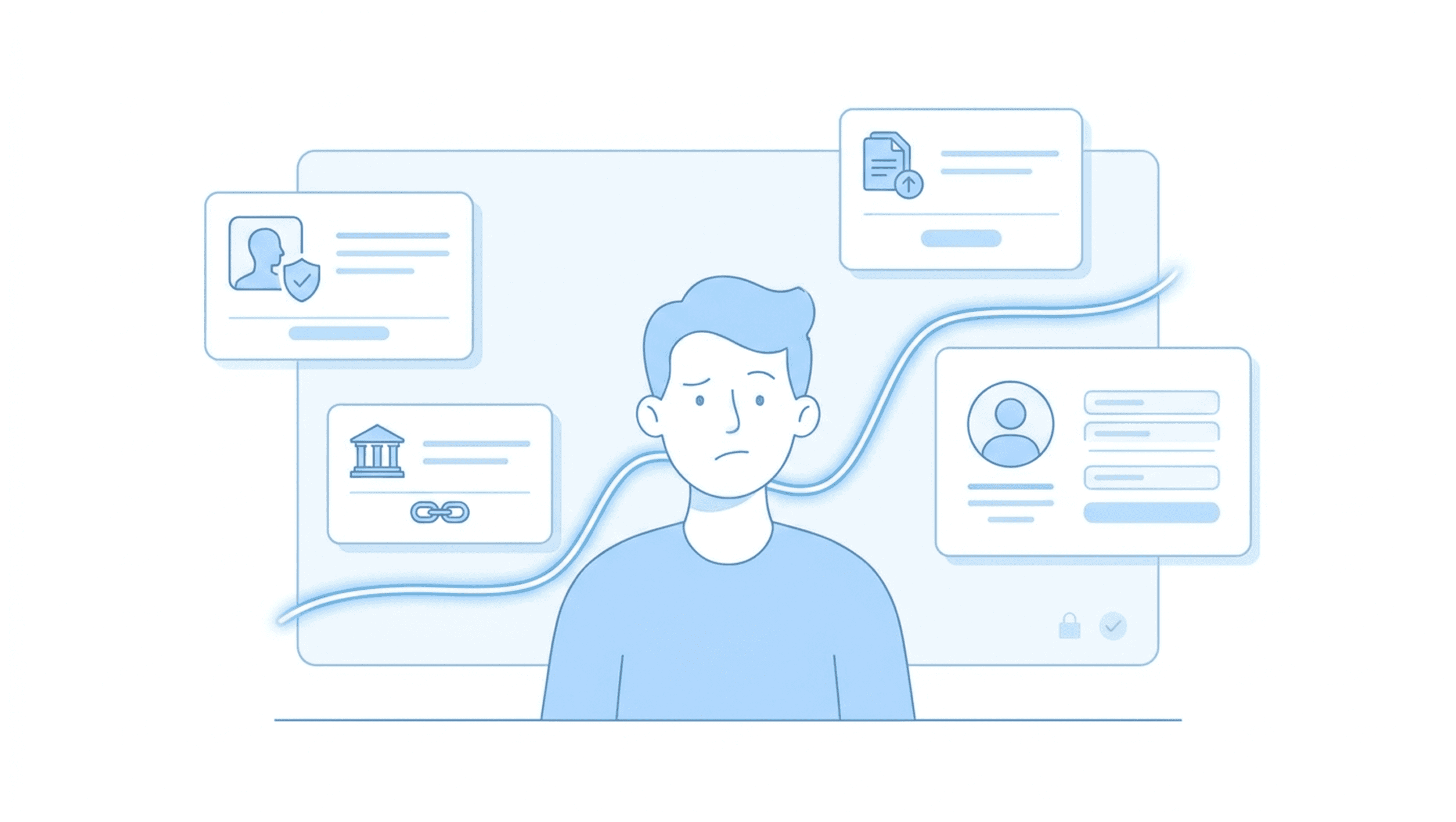
Many fintech products ask users to:
- Connect bank accounts
- Complete KYC
- Share financial information
- Upload documents
within the first few screens.
Impact
1. Higher onboarding abandonment
2. Lower activation rates
3. Reduced user confidence
A Common Example
A new user lands on an investment platform and is immediately asked to provide personal and financial information before understanding the product's value.
Without context, the request feels risky.
Trust should be built before it is requested.
Financial products often assume users understand:
- Risk profiles
- Asset allocation
- Investment categories
- Financial terminology
Most users don't.
Impact
1. Decision paralysis
2. Reduced engagement
3. Lower investment participation
A Common Example
While working on Kamaykya, we observed that many users wanted to invest but weren't confident enough to choose individual stocks.
Instead of forcing users to become market experts, we introduced curated stock baskets that simplified decision-making and helped users start investing with greater confidence.
Good fintech design doesn't require users to become financial experts. It helps them make informed decisions with less cognitive effort.

Many fintech dashboards display:
- Charts
- Numbers
- Market movements
- Performance metrics
But provide little guidance on what users should do next.
Impact
1. Lower engagement
2. Confusion
3. Missed opportunities
A Common Example
A user sees portfolio performance declining but receives no explanation, recommendations, or next steps.
The best dashboards answer:
"What should I do now?"
not just
"What happened?"

Some products attempt to simplify investing by minimizing discussions around risk.
This often creates the opposite effect.
Impact
1. Reduced trust
2. Poor investment decisions
3. User frustration
A Common Example
Users discover risks after making decisions rather than before.
Trust immediately declines.
Transparency builds confidence.
Users don't expect certainty.
They expect honesty.

Many fintech products prioritize feature expansion.
Users care about outcomes.
Impact
1. Feature overload
2. Lower adoption
3. Reduced product clarity
A Common Example
A wealth platform offers dozens of investment tools, but users simply want to know:
"How should I start investing?"
The most effective fintech products focus on helping users achieve their goals rather than exposing every available feature.
Many fintech products don't struggle because they lack features. More often, users leave because the experience feels confusing, overwhelming, or difficult to trust. When onboarding feels overwhelming, compliance workflows create uncertainty, or financial decisions seem too complex, users hesitate to move forward.
At DotEdge, we help fintech companies design experiences that reduce friction, build trust, and guide users toward confident decisions. Because in fintech, great design isn't just about usability it's about helping people take action with confidence.