- DotEdge Design
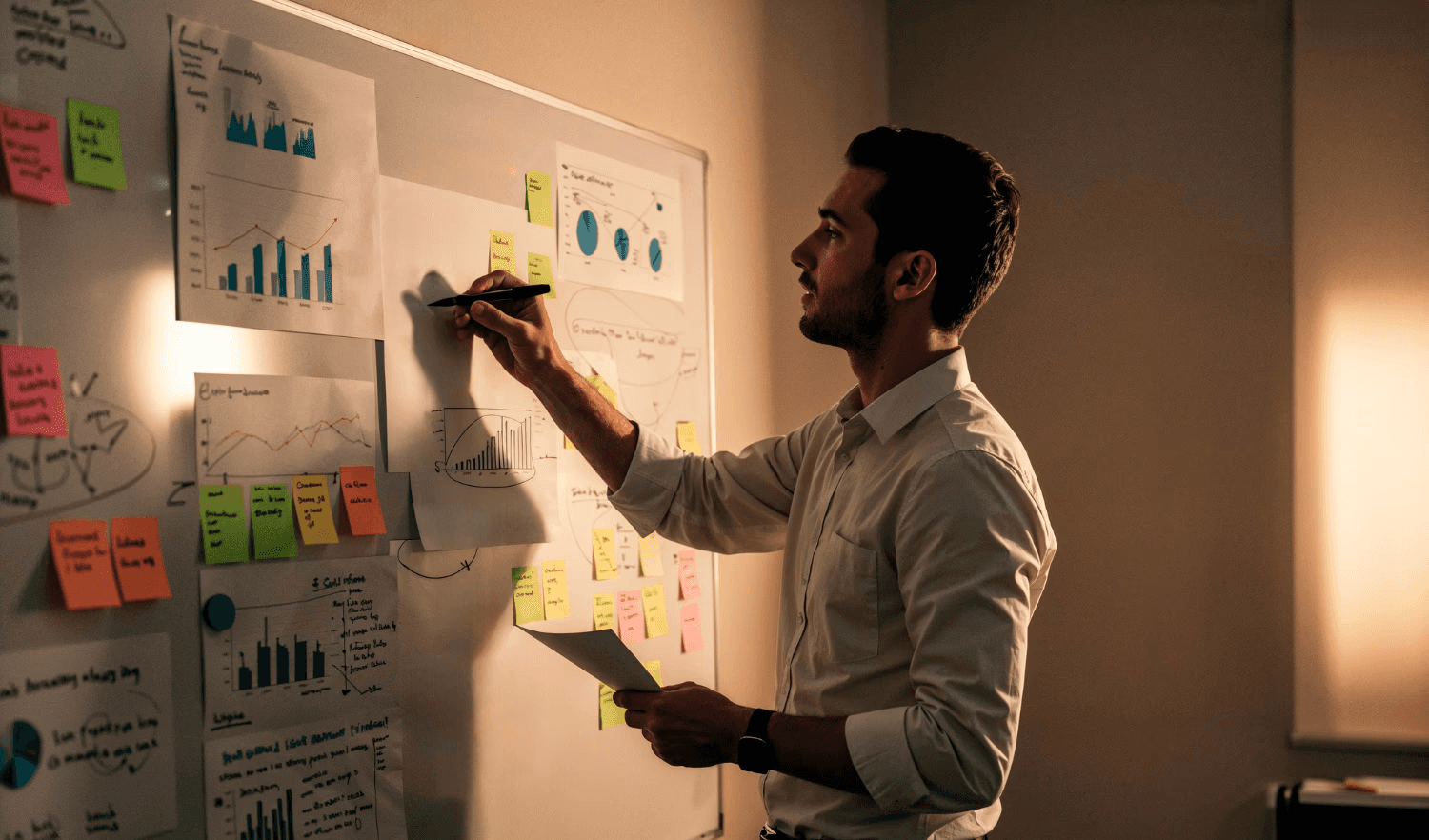
Building gives a real sense of progress. There’s something reassuring about having screens to show, demos to share, early versions that make it feel like things are finally moving. It feels productive, visible, and concrete. But before jumping into code, designing screens, or locking in a tech stack, it’s worth pausing for a moment. Not to kill momentum, but to make sure the effort you’re putting in is actually moving you in the right direction, and not just keeping you busy.
Early products don’t need large markets, they need sharp ones.
Trying to design for everyone usually results in something that feels vague to everyone. The first version of a product should feel almost too specific to outsiders.
The goal isn’t scale yet.
The goal is resonance.
If one clear group reads your idea and says, “This is exactly my problem,” you’re closer than most teams who’ve already started building.
Every early product is an experiment, whether founders admit it or not.
The mistake is building without knowing what you’re trying to prove.
Is the risk:
whether people care?
whether the workflow makes sense?
whether they’ll switch from what they already use?
If you can’t clearly say what needs to be true for this product to work, you’re likely building features instead of testing assumptions.
This is where many teams rush past the smartest move. Conversations, prototypes, demos, landing pages, even manual workflows can reveal more than months of development.
Not everything needs to be built to be tested. If the idea collapses when explained to real users, it’s better to learn that early before code, design systems, and sunk cost make change harder.
Early-stage products don’t suffer from lack of ideas. They suffer from lack of restraint.
Every additional feature feels helpful in isolation, but together they create confusion. What founders choose not to build often matters more than what they do.
Clarity is not minimalism.
Clarity is intentional focus.
Building is expensive- not just financially, but cognitively. Every decision made early becomes harder to undo later. Founders who take time to think before they build don’t move slower. They move with fewer resets, fewer pivots, and less rework. They build with intent instead of momentum.
At DotEdge Design Studio, we work closely with founders at this exact moment before things are locked in. Helping shape direction, pressure-test ideas, and bring clarity to what actually deserves to be built. Not to add polish early but to reduce regret later.